Neutral atoms can still interact with each other. When close enough, some pairs of atoms link up to form molecules joined together by a bond. By sharing electrons, the atoms are able to complete their outermost shells and become more stable.
The only atoms that have filled outer electron orbitals are those of Group 8, the noble atoms. All other neutral atoms are called 'radicals' and have some unfilled outer orbital. This allows for the possibility that an external electron moves into that orbital. When two atoms come close to each other, their outer s and p electrons may interact to form new electron orbitals in which the outer electron is shared by the two atoms. An electron moving around two nearby positive nuclei has approximately the same electric potential energy as around one, but its wave-function is more spread out, so its momentum-spread and kinetic energy can be lower. This either lowers the total energy of the two atoms together by about 2—3—5 eV, making a stable bond between the atoms. The atoms connected by a bond stay near to each other at about \(10^{-10} \mathrm{m}\) (1 Angstrom).
The presence of other atoms may alter the other orbitals' energy, possibly enough to shift an electron from one orbital to another and affecting the valence. For example, Cu has valence 1 or 2, Fe has 2 or 3. In reality, electrons are not completely confined to bonds and can be shared across three or more atoms.
Covalent Bonds
When two atoms' orbitals overlap, they split into two orbitals, one has a lower energy, thus an attracting bond, the other a higher energy — a repelling anti-bond (denoted with a *). Each molecular orbital can accommodate a pair of electrons (of opposite spin).
The simplest bonds are those between similar atoms. Below are the most common types of such bonds and anti-bonds, either axial, termed σ (sigma), or 'planar', termed π (pi). As two atoms approach each other, their orbitals modify as follows:
Each full bond decreases the molecules' energy by about 2-3-4 eV.
Dissimilar atoms with different energy levels of orbitals vary in the way they combine their orbitals; hybrid orbitals can form. The distinction between s- and p-orbitals becomes blurred in actual molecules. In some, such as C, they look the same; even some empty d-orbitals may be used to form such hybridized bonds, e.g., P, S, .... Electrons themselves affect the orbitals' energy. In all cases, however, there are the same number of orbitals in a molecule as in both atoms together.
Partially filled bonds are unstable, allowing interactions with further electrons.
1shared outer electrons form: half a σs bond e.g., H-H+
Each bond vibrates longitudinally with a natural frequency that depends on the bond energy and the atoms' masses, about 1013 Hz (light H2 has a frequency of 1.3 1014 Hz, while heavy Br2 has 0.7 1013 Hz); hence molecules tend to absorb InfraRed. Groups of bonds may oscillate in harmony.
A coordinate bond is a covalent bond in which electrons from only one atom occupy the bond orbital; for example, metallic hydrated ions.
Bond Energies
The average bond energies between atoms are as follows:
Note that the average bond energy in general is larger for smaller atoms and for single bonds of different sizes, but is weaker for double/triple bonds between atoms of different sizes. Actual bond energies vary depending on the molecule.
Electronegativity
Different atoms attract the electrons in a covalent bond with different amounts. Like most other properties of atoms, this varies 'diagonally' from Cs to F, because it depends on the size and effective charge of the nucleus. Thus small Fluorine pulls its (bond) electrons strongly — electronegative, while large Caesium is strongly electropositive.
Polar Bonds
Between atoms of different electronegativity, the orbitals are weighted towards one of the atoms, skewing the bond to one atom. The resulting skewed bond is called a polar bond.
Also when an s-electron shares an orbital with a p-electron the resulting wavefunction is naturally skewed by its non-symmetry.
Molecules with polar bonds are effectively electric dipoles with a large moment. An electric field turns them in about 10-11 s, so resonance occurs for about microwave 10 GHz.
A symmetric bond, on the other hand, acts not like a dipole but like a quadrupole or weaker, and is not affected by microwaves.
Ionic Bonds
When the electro-negativity difference between the two atoms is large, one or more electrons from the electropositive atom transfer to the electronegative one, forming two nearby ions of opposite charge X+Y- or X2+Y2-; positively and negatively charged ions are called cations and anions respectively. The required ionization energy for the electron to move out of the large electropositive atom is more than made up for by the gain in electrostatic energy in moving to the smaller electronegative atom, resulting in a "bond" with energy of about 0.4 — 4 eV. This is not truly a bond, in the sense that the two ions can move away from each other if there are other ions around them.
Molecules can lose or gain electrons to become ions, just like atoms, independently of its bond polarity.
Shape of Molecules
The configuration of the molecular bonds around an atom depends on the number of bonds with other atoms (red) and the filled outer orbitals (pink).
Bonds and filled orbitals are negatively charged, so they repel each other as far as possible.
The neutral noble atoms (group 8), such as He and Ne, have filled outer shells and hence do not form bonds with other atoms. They remain as stable atoms.
Small molecules
Most atoms (except Carbon and Silicon) have 1, 2, or 3 outer electrons or unfilled electron orbitals. They can thus form 1, 2 or 3 covalent bonds at most. Amongst each other they have a limited capacity for bond formation, hence they form small molecules.
'Organic' molecules
Carbon and Silicon have 4 outer electrons, and 4 unfilled orbitals. They can thus form large molecules, without limit, silicon less so because a Si-Si bond is half as strong as a C-C bond. (One can imagine that to name all the different possible organic molecules is a problem.)
Polymers
Some molecules can repeat themselves to form very large molecules called polymers. There is no limit to how big such molecules can get.
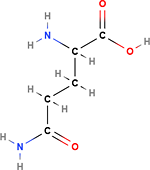
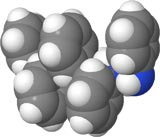
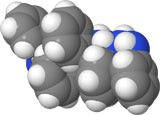
Molecules change their shape continually as the single bonds rotate. But double and triple bonds are rigid. (Click on molecule.)
Very large molecules are mostly entangled and so have restricted bond rotations; but they vibrate and thus may change their overall shape. At higher temperatures, they untangle.
The traditional notation used to denote a molecule is simply to list down the constituent atoms as in H2O or CO2. Of course the type of molecule depends not only on the constituent atoms but also how they are connected relative to each other in 3D.
Isomers
Molecules with the same constituent atoms but placed differently are effectively different molecules — they are called isomers. Isomers may differ in the placement of key functional groups, or in their geometry:
Functional Isomers — same atoms but in different functional groups
Positional Isomers — same functional groups and same backbone but placed at different points
Enantiomers — mirror images (l or d), e.g., helical molecules
Geometric cis/trans or planar asymmetry, when the relevant bond is rigid
Tactic polymers — for polymers, the way the component molecules are joined makes a difference:
Isotactic — when there is a choice in orientation, the same choice is made throughout the polymer;
Syndiotactic — orientation choices alternate or keep a pattern;
Atactic — orientation choices are random.
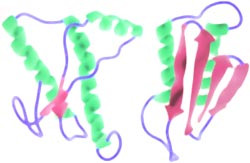
Large molecules are sometimes drawn in this "cartoon" form to make their structure easier to see.
A large molecule may "fold" up in (very) many different ways, producing effectively different variants of the same molecule.
Conversely, two large molecules, that are quite different from each other, may fold up so that they have the same outward appearance (electrically).
Intermolecular Forces
At high temperatures, energy (from photons or collisions) cause bonds in molecules to break; as the temperature is lowered, this happens temporarily. Below a temperature of about 10000 K, molecules become very stable. They still feel a residual electromagnetic force, depending on the type of molecule:
Ions are charged and hence move according to the electromagnetic field. They attract/repel each other as charges, with energies of about 0.4 — 4 eV.
Polar molecules are electric dipoles and hence feel the electromagnetic field, especially by rotating. They attract each other, proportionally to \(\frac{1}{r^3}\), with energies of about 0.01 — 0.1 — 0.4 eV, e.g., hydrogen bonding 0.25 eV; but much more weakly, proportional to \(\frac{1}{r^6}\), if the molecules are rotating freely.
Non-polar neutral molecules still have a small residual (van der Waals) force due to the fluctuating or induced electric potential surrounding the electron clouds of atoms. The energy of such interactions is much smaller, 0.02 — 0.04 eV.
Electrons in molecules can absorb energy by jumping to a higher-energy molecular orbital. An excited molecule normally falls back to its low-energy orbital by emitting a photon in 10-8 s. But since the outer shells of most molecules are filled, this excitation energy tends to be high (UV). For the same reason that all electrons are paired with opposite spin and rotation, most molecules have no net internal angular momentum and so no magnetization (though the nuclei of molecules may have the same or opposite spins, resulting in tiny energy differences).
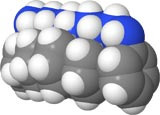
Click on molecule Large molecules may have different charges on different parts of the molecule; in this case it is effectively ionic or polar even if it may be overall neutral in charge.
The charge attractions between large molecules may cause them to "stick" together even though there are no actual covalent bonds between them. This can occur on larger scales as well.
Interactions between Molecules — Chemical Reactions
Molecules vary in how stable they are. Some may be insufficiently stable and reform into new molecules by recombining their atoms. There are two basic processes for such reactions to occur:
the breaking and/or formation of a covalent bond,
the transfer of an electron from one molecule (reducer) to another (oxidizer), resulting in different molecules.
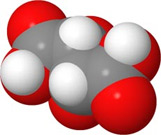
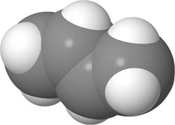
[Atoms are schematically shown as shiny colored balls; in reality they are not. The color code is: CHNOSClMg, etc.]
Bond breakage
A bond may be inherently weak and breaks up spontaneously or when hit hard.
H2O2 → 2 OH(Click)
The molecule breaks up into two radicals (with partially filled orbitals) or two ions (+ and -). Higher temperatures increase the vibrational energy of the bonds, making it more likely that they break.
H++Cl- → HCl
Coversely, two molecules may meet and form a bond. This occurs mostly between two free radicals that collide by chance, or two ions (+ and -) or polar molecules that attract each other, especially energetic 'free' electrons and protons.
Electron Transfer
Atoms have different energies ("affinities") for their outer electrons. Electropositive atoms, or ions, have high-energy outer electrons that can be donated to electronegative atoms/ions, that have low-energy unfilled orbitals.
An acid molecule is one that can lose a protonH+; a base molecule is one that can accept a proton (or lose OH- etc.). Small or charged molecules are more powerful in this effect than large polar molecules.
When a charged ion or a polar molecule approaches a neutral molecule it may induce it to become more polar and transfer electrons while breaking and reforming bonds.
A bond rearrangement may occur, possibly even within a molecule:
H2 + Cl2 → 2 HClCH3COH ↔ CH2CHOH
Molecules that are semi-stable require activation energy to react; this can be in the form of an energetic collision (high temperature) or the absorption of a photon, or excessive bond strain.
Reaction Rate
The rate at which a reaction occurs (per molecule) depends on how often collisions occur (concentration of the reacting molecule \(n\)), and their energy (temperature \(T\)), how difficult it is to react (the activation energy barrier \(E\)) and the entropy benefits of the reaction \(\Delta S\) (e.g., more/less molecules, of mixed elements) :-
\[ne^{\Delta S - E/T}\]
A high pressure favors the formation of fewer larger molecules, and increases the rate of collisions; low pressure favors more smaller molecules.
Reactions between molecules in the gas or liquid phase are faster than in the solid phase; reactions between immiscible fluids or solids is constrained to occur at their surface; the concentration of particles at the surface boundary may be higher/lower than inside the fluid.
Catalysts may increase this rate either by holding the molecules on their surface thereby increasing their effective concentration, or by reacting with them in intermediate steps, effectively dividing the energy barrier.
Reaction Networks
Given a number of molecules, a network of reactions may occur.
The network on the left has a multitude of reactions: CH4 + OH → CH3 + H2O CH3 + O2 → CH2O + OH CH2O + OH → CHO + H2O CHO → CO + H O2 + H → OH + O CO + O → CO2 O2 + OH → HO2 + O CO + HO2 → CO2 + OH ....
CH4 + 2O2 → CO2 + 2H2O
Most reactions quoted by scientists are the starting and end-results of the molecules, and ignore the intermediate steps.
The slowest step/s in the fastest path will dominate the whole process. The end-result of reactions is the elimination, addition or substitution of parts of a molecule, the transfer of electrons, or the rearrangement of a molecule into an isomer.
Combustion is the exothermic reaction between molecules at high temperature, initiated by a few free radicals, but propagated by the free radicals/ions produced by the heat, until the reaction terminates by the recombination of all the free radicals.
The product molecules are more stable (have less energy) at the given thermodynamic conditions, because they have stronger unstrained bonds.